This year's winners are showcased in a new format, via a documentary film by director Dominik Mencej and director of photography Rok Kajzer Nagode. The awards were presented to topmost works belonging to different architectural practices - practices which build, change, and enrich our living space. Plečnik's garden and house together form an ambient where the great architect leveraged originality, idiosyncrasy, and architectural invention in order to tailor it for himself - which are all qualities of the 2023 Plečnik Award winners, the recipients of the highest national recognition in architecture.

Architecture is the field of art that most directly shapes our shared and private spaces, thereby influencing our environment and daily lives. Regularly recognizing and celebrating the best practices in Slovenian architecture is therefore of crucial importance for society, individuals, and the profession.
Fifty years of the Plečnik Awards marks a significant milestone in recognizing the finest examples of architecture that build upon Plečnik’s values and address current social challenges in a contemporary manner through exceptional designs, projects, or initiatives. In recent years, the Plečnik Awards, as the nation’s premier architectural honors, have played a pivotal role in defining the criteria for quality architecture and the built environment. Half a century of tradition is not merely an inspiration, but also the foundation for the responsible pursuit of excellence in the artistic, technical, and socially responsible development of the profession and spatial culture.
This significant anniversary of the Plečnik Awards serves as a reminder of how important it is to regularly re-examine the criteria for good practice in an ever-changing society and environment. Only with great attention and critical thinking will we be able to continue to encourage the creative powers of architects and landscape architects, as well as the sensitivity of public and private clients, to jointly realize a more sustainable and culturally rich built environment for future generations.
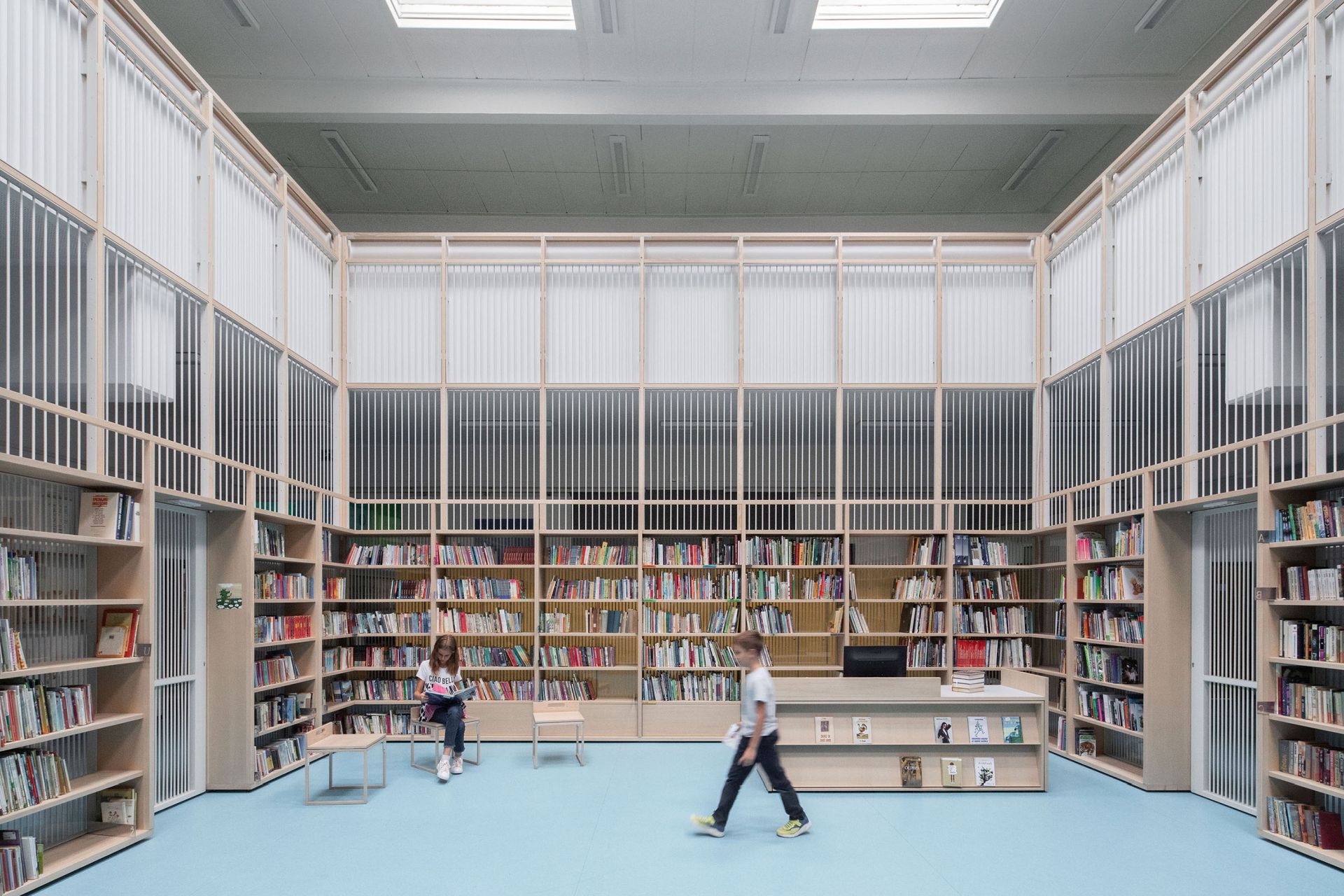
In this year’s call for entries, we received a large number of architectural projects that breathe new life into the existing building stock: ranging from examples of cultural heritage renovation to the revitalization of more modern buildings. Half of all submitted projects were based on the renovation of existing structures, leading the jury to the conclusion that our built environment represents our greatest potential for development. Through critical reflection, architecture is capable of recognizing hidden potential where others see only the status quo and established uses of space: thus, even through unassuming, subtle interventions, it helps address the needs of individual communities. This year’s award-winning Open Library at Vič Elementary School demonstrates how we can breathe new life into pragmatically designed buildings, such as schools, and create sustainable, inspiring spaces for children’s education and socializing. By recognizing the best examples of revitalization, we encourage decision-makers at the local and national levels to focus on the flexible reuse of existing buildings. This approach is not only more sustainable but also more time-efficient and can contribute to the immediate improvement of the environments in which we, as a society, operate and coexist. A large number of elementary and secondary schools in Ljubljana and elsewhere in Slovenia are facing a similar shortage of classrooms amid a wave of larger generations of children, which is why we believe the Open Library project has great potential to evolve into a model for the renovation of the national school building stock.
Another theme that the jury identified this year from the submitted works is the broad significance of community in architecture. Architecture is not an isolated discipline of individuals, but rather the result of diverse collectives composed of experts from various fields, as well as users: both during the creative process and later, during the period of use and its evolution over time. Among the submitted works, larger groups of creators predominate, often drawing from diverse disciplines, which gives these creative collectives a broad spectrum of abilities to recognize the potential of space, the needs of society, and ways of collaborating with communities. A more thorough understanding of societal needs and a deeper insight into the content of the tasks are reflected in the complex processes of creating solutions and products that can serve changing societal needs more effectively. The submissions we received this year demonstrate how architecture can bring disciplines together and foster a sense of belonging and shared responsibility for creating a quality environment and society. The medal-winning project Krater, a typology of urban wilderness, demonstrates, among other things, that urban development is not based solely on the regulation of buildings and spaces, but is also the result of the shaping of processes and events. With this medal, the jury proposes that the “bottom-up” approach to urban development should not remain merely the mission of activists, but that such principles should be more frequently incorporated into systemic levels of reflection on the city and its planning.
By recognizing the best examples of community-oriented research and design, we can foster a more collaborative approach to architecture, which is important not only in urban but also in rural communities. Community-oriented architecture fosters a sense of belonging and pride in the built environment. For the first time in our history, the project “Together in the Community” explores the story of the construction of cooperative housing in an exceptionally systematic and in-depth manner, presenting it through an exhibition and a publication. It offers an opportunity to understand the power of local community building in the past and encourages reflection on the future development of cultural and community infrastructure across Slovenia.
Finally, the jury for this year’s awards wishes to highlight the importance of materiality, particularly in light of social and climate change. The approach to available raw material resources within the local context is a key element in creating architecture that is sustainable, responsible, and responds appropriately to the dynamics of our environment. The design of the kindergarten in Kočevje, with its thoughtful typology and the introduction of interior atriums, creates a visually fluid educational and play landscape where the architecture adapts to the child’s scale. The kindergarten is built of wood, and the children experience its tactility and warmth daily, thereby developing a relationship with the material and its maintenance. The kindergarten is primarily a playground for the experiences of children who will build future communities: not only with an appreciation for beauty, but also for ethics and sustainability.
Both Plečnik Fund scholarships highlight master’s theses that, in a unique way, encourage reflection on the significance of materiality in architecture. Lenart Piano explores the possibilities of building with hempcrete in a cultural landscape that offers opportunities for hemp cultivation and its processing into a building material. His master’s thesis demonstrates that building sustainably means, above all, recognizing the possibilities of new local material resources and their potential for architecture.
Sebastjan Cvelbar’s master’s thesis, with its project of metamorphic urban architecture, presents a model for recycling existing building materials within Ljubljana’s urban structure. Using the principles of temporariness and urban mining, he creates a material bank that utilizes and offers used materials for reuse. By awarding both scholarships, the jury aims to highlight the necessity of integrating the principles of the circular economy into regular systemic processes at both the municipal and national levels.
All three themes highlighted this year represent a model of environmental development that is sustainable, thoughtful, community-oriented, and focused on the ethical use of materials and energy. By celebrating the best examples of architecture, let us encourage decision-makers and creators to fulfill these goals and contribute to the better development of Slovenia. We are all responsible for ensuring that our landscape, cities, and communities are vibrant, equitable, and sustainable. Architecture plays a vital role in achieving these goals.
The Jury of the 2023 Plečnik Awards
Fifty proposals were submitted for the 2023 Plečnik Awards. Among them were 27 completed projects, categorized as large-scale architectural projects (13), small-scale architectural projects (12), and public space projects (2). We received 5 nominations for professional journalism, 8 nominations for contributions to spatial culture, and 10 nominations for the Plečnik Fund scholarship.
The jury began its work at its first meeting on February 21, 2023, when the jury members reviewed the submitted entries and nominated and confirmed Aljoša Dekleva as jury chair. In the subsequent process of evaluating the quality of the submitted works, the jury selected those that, based on the digital application materials, demonstrated potential for an award. During three separate site visits in March, the jury then inspected 10 built works at their respective locations. After each visit, the jury members critically assessed each individual work and its role in the space.
Upon completing the on-site visits, the jurors unanimously excluded two works from further consideration for the 2023 awards: they determined that their execution was incomplete and that this significantly impacted the jury’s ability to assess their qualities. In the concluding part, the jury reviewed the remaining 8 works and, through cross-examination, formulated joint conclusions for the awarding of the Plečnik Awards.
At the meeting on March 27, the jury unanimously selected one work from each category that best aligns with the mission and criteria of the Plečnik Awards. The exception is the category of professional journalism, where the jury determined that none of the submitted works met the expected format, which in principle differs from a scientific work, periodical, monograph, or popular publication. Consequently, the jury did not award a medal in this category.
In the final round of evaluation, the jury selected one work for the Plečnik Award from among three entries—from the categories of large-scale architectural realization, small-scale architectural realization, and public space—and awarded Plečnik Medals to the remaining two.
On the 50th anniversary of its founding and the first-ever presentation of a Plečnik Award, Architect Jože Plečnik Fund presented the 2023 Plečnik Awards. The solemn anniversary event took place on Monday 22nd May at 8 p.m. in the Plečnik House garden at 4 Karunova Street, Ljubljana.
The keynote speaker at the ceremony was the rector of the University of Ljubljana, Prof. Dr. Gregor Majdič, and the event was hosted by Luka Bokšan in the relaxed atmosphere of a May evening. Prof. Boštjan Vuga, MA, Chairman of the Board of the Jože Plečnik Fund, welcomed the guests and award winners with an introductory speech: "The Fund awards prizes to works that combine artistic imagination with contemporary social, political, economic, technological, and environmental developments, and which demonstrate that their authors are not only active creators of space, but of society as a whole. It also continues the tradition of expanding the field of activity of architects. The creators work in authorial, multidisciplinary groups, and the awards go to works that represent the reuse of spaces, works that are temporary and unfinished."
The expert jury, composed of Aljoša Dekleva (chair), Matej Kučina, Meta Kutin, Anja Planišček, and Špela Spanžel, selected one Plečnik Award, three Plečnik Medals, and two student scholarships in the revamped award categories (for large-scale architectural realization, small-scale architectural realization, public space, professional journalism, for the enrichment of spatial culture) selected one Plečnik Award, three Plečnik Medals, and two student scholarships.
The responsibility for the management and organisation of the 2023 Plečnik Award call for submissions and award ceremony was assumed by Boštjan Vuga and Urša Vrhunc on behalf of the Fund.